
Library · Growing and making
Types and processing
The difference between red and green rooibos is one processing decision. Everything downstream of it, cut length, colour, flavour, moisture, is something to put in writing with a supplier.
Published 2026-10-21
Red and green
There are different rooibos types, made by different processing. For traditional red rooibos the cut green leaf and stem are bruised and left to oxidise in heaps before drying; for green rooibos the bruised material is dried immediately so that oxidation does not take place. The stage growers call fermentation is an enzymatic oxidation: the plant's own enzymes, meeting oxygen once the cells are broken, turn the green material red-brown and develop the characteristic aroma. No culture is added. Green rooibos keeps a greener colour and a lighter character in the cup; what it tastes like next to red is best settled by tasting the two side by side.
Which type suits you is a matter of use and taste rather than quality. Red is the default in most markets and the one most buyers mean when they say "rooibos". Green is a distinct product, usually sold as such, and most of it is exported. The chemistry of the heap, one processor's published heap duration, and the four kinds of drying that should never share one number are in the oxidation and drying chapter; where these steps sit among the twelve stages from seed to shelf is drawn on the supply chain explorer.
From cut leaf to packed lot: where red and green part
Both types start and end the same way. The difference is one decision after bruising: let the plant's own enzymes oxidise the leaf overnight, or dry it at once. Choose a step to read the mechanism.
Cutting both types
Harvested sheaves are cut mechanically to short lengths. Cut length later becomes one of the grading factors, so the setting matters from the first pass.
Bruising both types
The cut leaf and stem are bruised and moistened. Breaking cell walls lets the plant's own enzymes meet oxygen, which is what the next step depends on.
Oxidation red rooibos only
Bruised material is heaped on the court overnight. Enzymes in the plant oxidise its compounds, and the green turns deep red-brown while the characteristic aroma develops. Growers call this fermentation, but no microbial culture is added; the change is enzymatic.
Sun drying red rooibos only
Heaps are turned out and spread thin on the court to dry in the sun. Drying stops the oxidation where the processor wants it and brings moisture down for storage.
Rapid drying green rooibos only
For green rooibos the bruised material is dried immediately, before oxidation can run. Processors use methods such as heated fluid-bed dryers to hold the green colour and lighter character.
Sorting and grading both types
Dried leaf is screened into cut fractions and assessed on colour, flavour, aroma and cut length. Grade names belong to each processor; a sieve distribution is the comparable number.
Steam pasteurising both types
Bulk rooibos for both local and export markets is steam pasteurised to control microbial load, then dried again before packing.
Testing and packing both types
Lots are tested, documented and packed in bulk bags for packers and exporters, or packed to retail. Lot identity travels on the bag with origin, mass and date information.
Read the whole sequence as text
Shared: Cutting, Bruising. Red branch: Oxidation, Sun drying. Green branch: Rapid drying. Then shared again: Sorting and grading, Steam pasteurising, Testing and packing.
- Cutting (both): Harvested sheaves are cut mechanically to short lengths. Cut length later becomes one of the grading factors, so the setting matters from the first pass.
- Bruising (both): The cut leaf and stem are bruised and moistened. Breaking cell walls lets the plant's own enzymes meet oxygen, which is what the next step depends on.
- Oxidation (red): Bruised material is heaped on the court overnight. Enzymes in the plant oxidise its compounds, and the green turns deep red-brown while the characteristic aroma develops. Growers call this fermentation, but no microbial culture is added; the change is enzymatic.
- Sun drying (red): Heaps are turned out and spread thin on the court to dry in the sun. Drying stops the oxidation where the processor wants it and brings moisture down for storage.
- Rapid drying (green): For green rooibos the bruised material is dried immediately, before oxidation can run. Processors use methods such as heated fluid-bed dryers to hold the green colour and lighter character.
- Sorting and grading (both): Dried leaf is screened into cut fractions and assessed on colour, flavour, aroma and cut length. Grade names belong to each processor; a sieve distribution is the comparable number.
- Steam pasteurising (both): Bulk rooibos for both local and export markets is steam pasteurised to control microbial load, then dried again before packing.
- Testing and packing (both): Lots are tested, documented and packed in bulk bags for packers and exporters, or packed to retail. Lot identity travels on the bag with origin, mass and date information.
On the court
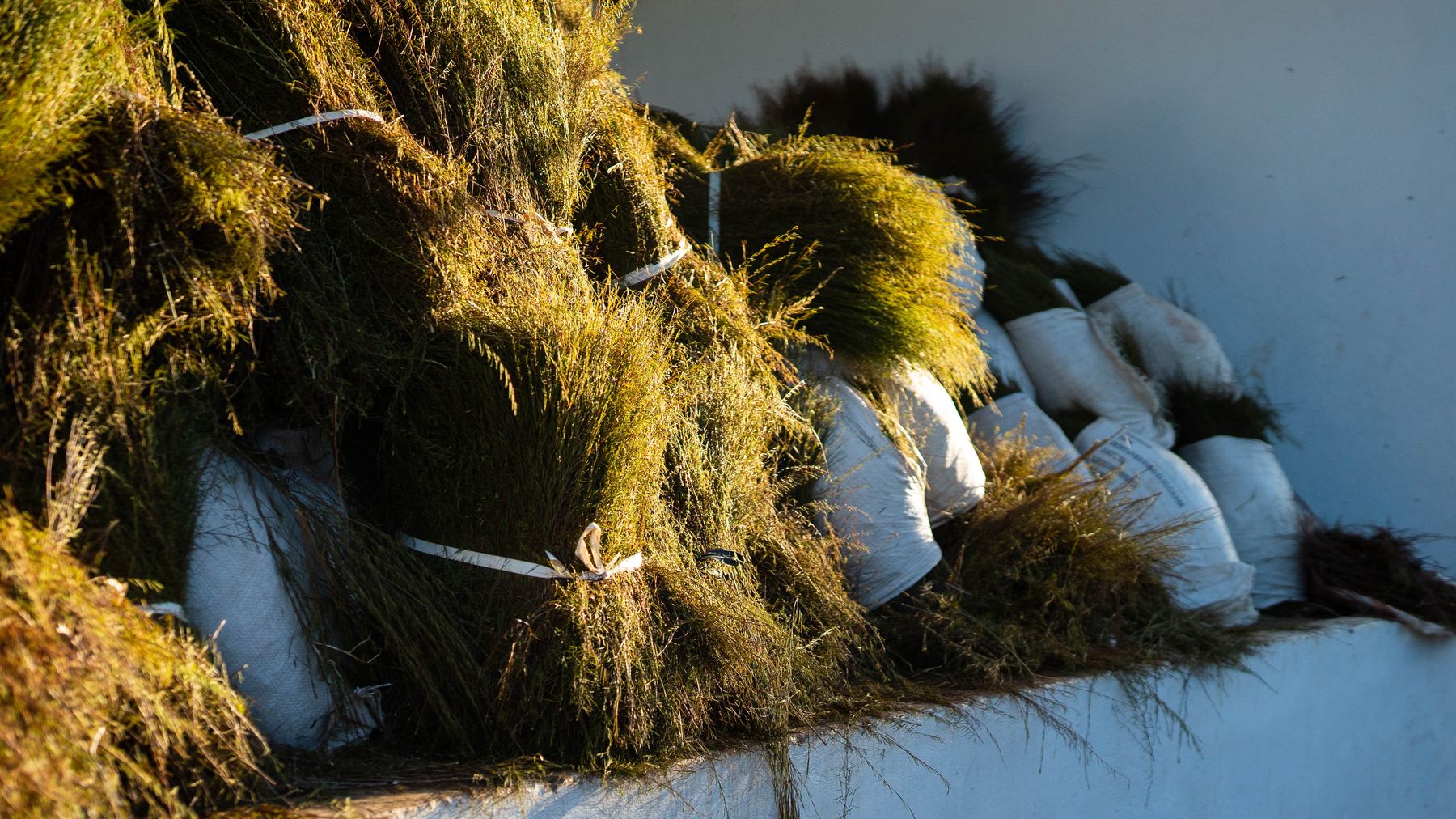
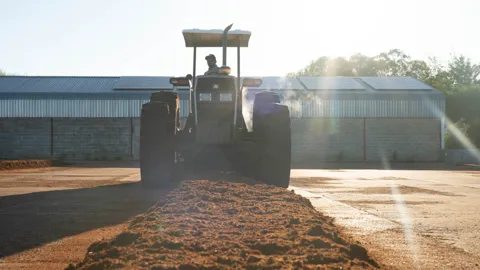
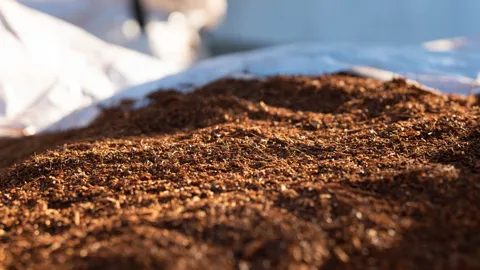
The court is a large flat surface, often concrete, where the bruised material is heaped overnight and then spread to dry. The photographs here show the sequence on a Bokkeveld farm: cut green material arriving, the heap turned out at sunrise after the night's oxidation, and the red material spread thin to dry in the sun. Processors differ in sequence, equipment and timing, so no durations or temperatures are given on this page; those belong in a processor's own specification, and the questions at the end ask for them.

What green asks of the processor
Green rooibos limits oxidation by drying rapidly after cutting. One processor describes a heated fluid-bed dryer and drying to a low moisture; the EU single document for the protected name sets a stricter moisture criterion for green product than for oxidised. Green character, moisture stability and the retention of the leaf's compounds need their own specification and storage validation; do not assume that the sensory profile or shelf life of red transfers unchanged to green.
Secondary processing
Primary processing makes the product; secondary processing makes it saleable. Dried material is received and graded, screened into cut fractions through sieves, passed over magnets, blended to a specification, steam pasteurised, dried again and packed. Pasteurising is there for a reason: raw rooibos carries a microbial load, and a dry product still needs validated controls rather than an assumption that sun and heat made it safe. Lots are tested and released with their documents.
A batch history worth keeping
Link harvest lots to cutting runs, oxidation batches, drying runs, raw storage lots, blends, pasteurisation runs and final packed lots. Record actual times, temperatures where controlled, moisture results, cleaning, operators, interventions and release decisions. Keep a mass balance from incoming material through water added, drying losses, screened fractions, rework and finished product. A fresh-to-dry ratio from another farm is not a measured yield.
Processing questions
- Is this lot red or green, and where was the oxidation step done, if any?
- Can you send a written specification with cut length and moisture, not only a grade name?
- What does your grade name mean in numbers, and does it mean the same across lots?
- Was the lot pasteurised, and was anything applied to the leaf after drying?
- Which of your grades did the sample I tasted come from?
These appear automatically in a brief when you choose the matching options in the brief builder.
Sources and notes for this page
The sequence follows Rooibos Ltd's broad description and the Council FAQ; Carmién's page supplies the equipment detail (cutter, magnets, sieves, a fluid-bed dryer for green) and its timings are not restated. The microbial reason for pasteurising follows the 2014 review. Moisture criteria for the protected name come from the EU single document.
- SA Rooibos Council, Frequently asked questions, retrieved 2026-10-21.
- SA Rooibos Council, Information sheet, 2022, retrieved 2026-10-21.
- Rooibos Ltd, About rooibos, retrieved 2026-10-20.
- Carmién, Rooibos production and processing, retrieved 2026-10-21.
- Gouws, Hartel and van Wyk, 2014, retrieved 2026-10-20.
- EU Implementing Regulation 2021/865, Rooibos / Red Bush PDO, retrieved 2026-10-20.
How sources are chosen and read is explained on the Sources and methodology page.