Library · Growing and making
Growing and harvest
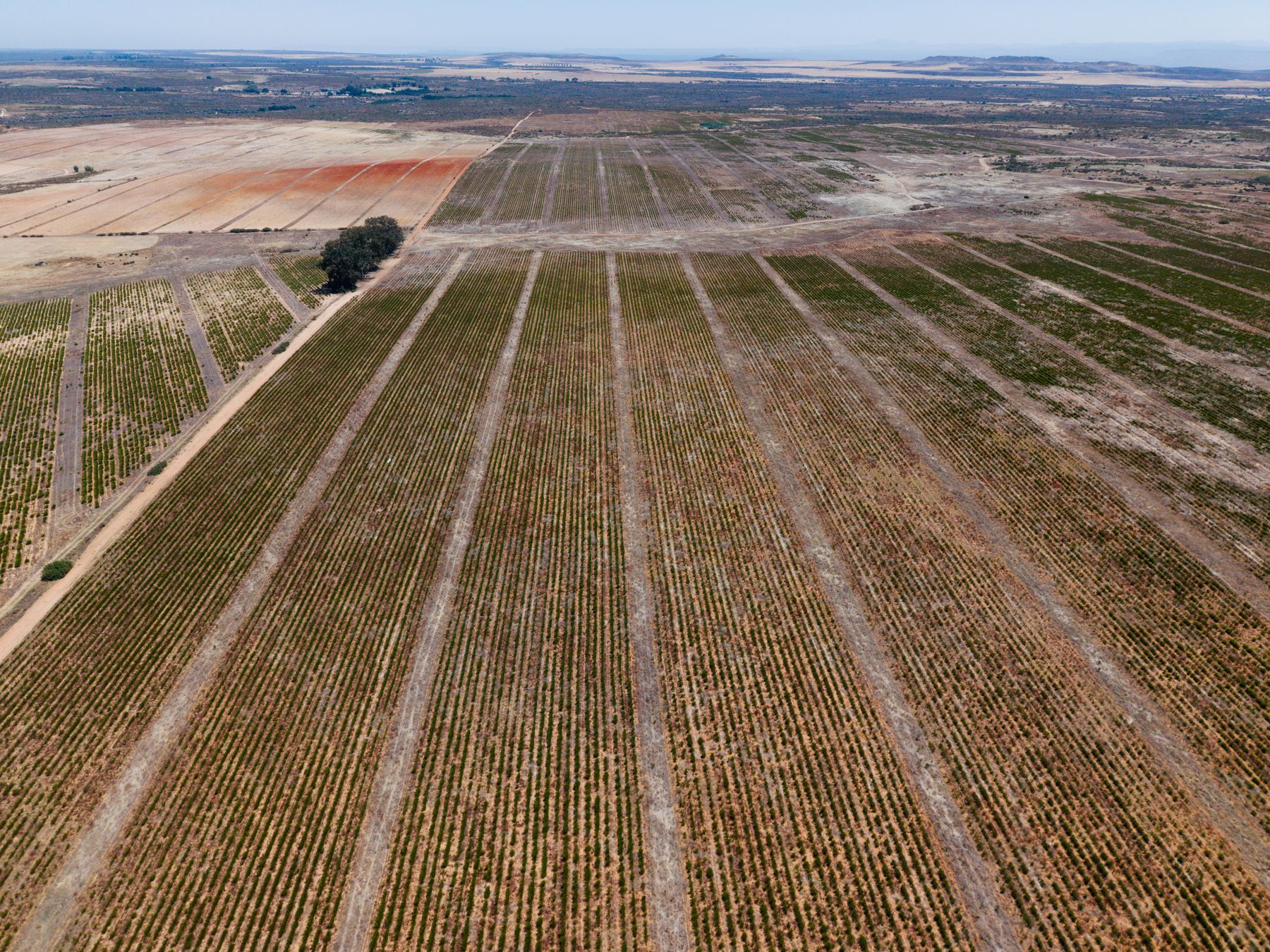
Rooibos is not an annual. A planting gives nothing in its first year, then several harvests, then rest. The explorer below draws each stage and says what the plant is doing and why that takes the time it takes.
Published 2026-10-21
Industry guidance describes nursery sowing around February and March, transplanting later in the winter rainfall season, and a first harvest after roughly eighteen months. The Council describes re-establishing a field after three to five harvests. Actual calendars depend on establishment weather, district and plant condition; what follows is the shape of the cycle, not a farm's operating rule. Seed, scarification, direct sowing against nursery seedlings and cover crops have their own chapter, seed and establishment; this page's place in the whole chain is drawn on the supply chain explorer.
The life of a rooibos planting
One planting, several harvests. Choose a stage to read what happens and why it takes the time it takes. The sheet reads left to right and back, and the last stage returns to the first.
Seed Late summer, after flowering
Each small yellow flower sets one pod with a single seed. Pods split when ripe, so seed is gathered by sifting sand around the plants; early growers learned that ants collected it first.
Rooibos seed is hard-coated and small. Industry guidance describes sowing in nurseries around February and March, which means seed collected in one season is sown the next.
Nursery Sown in late summer
Seed is sown in nursery beds and raised for a few months before it goes to the field. Germination treatment and seed provenance are decisions each grower makes with local evidence.
The nursery stage separates seed quality from field conditions: a seedling that fails here cost little; one that fails after transplanting cost a season.
Transplanting Winter, with the rains
Seedlings are planted out into deep, sandy, well-drained and acidic soils during the winter rainfall season, so roots establish before the dry summer.
The plant is a legume with a single basal stem that branches above the soil. Spacing, survival and replacement are recorded per block by careful growers.
Establishment First year and a half
A new planting gives no harvest in its first year. The shrub builds a deep root system and a branching frame; the first cut comes roughly eighteen months after sowing.
This is the lag that shapes the market: the decision to plant is taken on recent returns, but the leaf arrives years later.
Mature shrub Years two to five
The shrub carries narrow green leaves on fine stems and flowers yellow each spring. Yield rises, peaks and then declines as the plant ages.
Rainfall, district and plant condition move the curve. Industry sources describe three to five harvests before a field is re-established.
Harvest Summer into autumn, each year
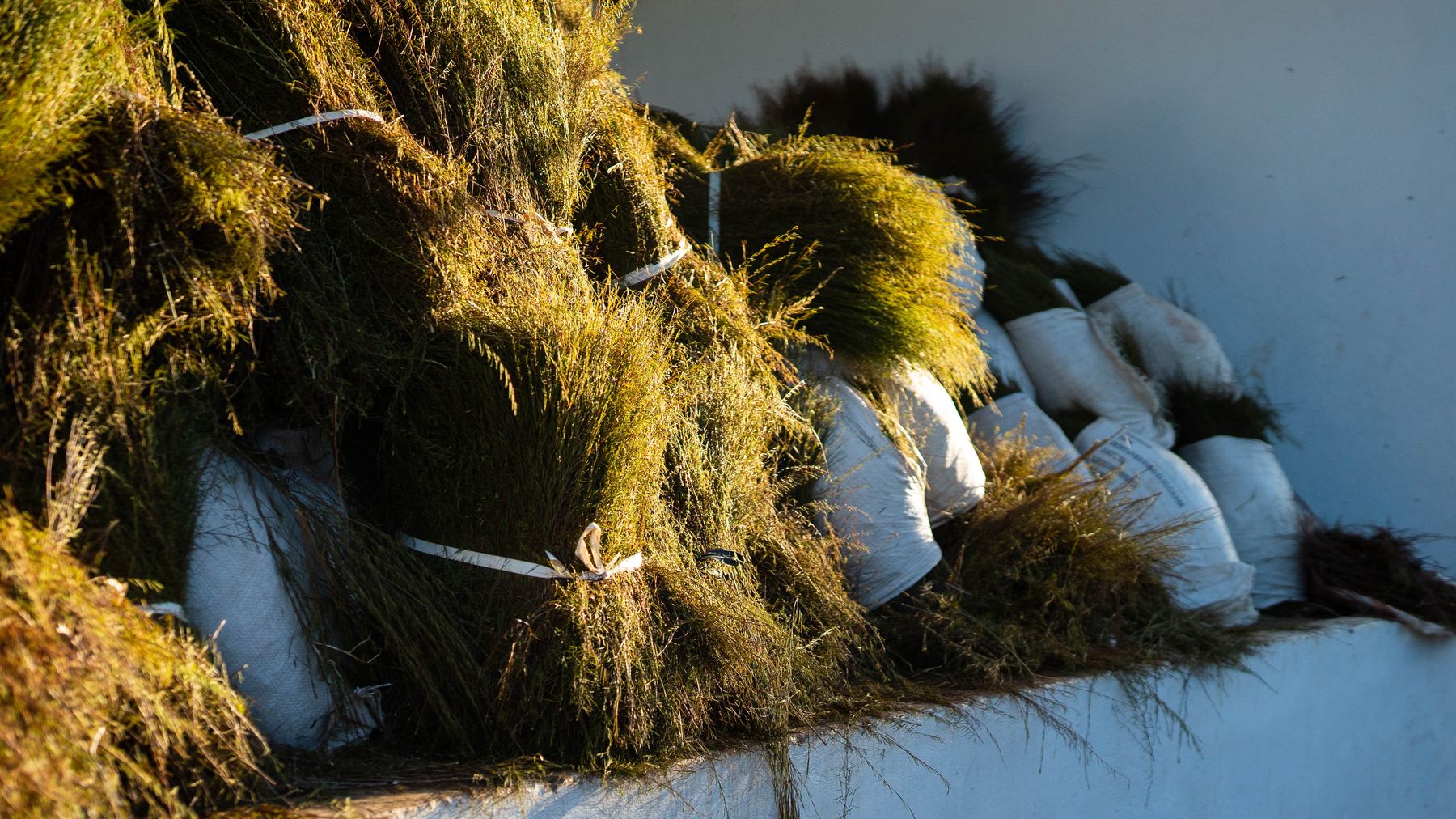
Shoots of leaf and fine stem are cut, mostly by hand, and bound into sheaves for transport to the processing court. Published cutting heights differ between sources, so none is a rule.
The harvest lot carries the season and year that follow the leaf to the invoice. Fresh mass and dry saleable mass are different numbers.
Regrowth After each cut
The cut shrub shoots again from the remaining frame and grows through the next year for the following harvest. Cutting too low or too often shortens the life of the planting.
Regrowth is what makes rooibos a multi-year crop rather than an annual: one planting, several harvests.
Rest and replanting After several harvests
An old stand is taken out and the land rests, often under a cover crop, before rooibos is planted again. Later guidance says fire is not used to clear old fields because it destroys soil organic matter.
The rest period, the cover crop and the replanting decision are the slow levers of supply; they also decide how much land is in production in any given year.
Read the whole sequence as text
- Seed (Late summer, after flowering): Each small yellow flower sets one pod with a single seed. Pods split when ripe, so seed is gathered by sifting sand around the plants; early growers learned that ants collected it first.
- Nursery (Sown in late summer): Seed is sown in nursery beds and raised for a few months before it goes to the field. Germination treatment and seed provenance are decisions each grower makes with local evidence.
- Transplanting (Winter, with the rains): Seedlings are planted out into deep, sandy, well-drained and acidic soils during the winter rainfall season, so roots establish before the dry summer.
- Establishment (First year and a half): A new planting gives no harvest in its first year. The shrub builds a deep root system and a branching frame; the first cut comes roughly eighteen months after sowing.
- Mature shrub (Years two to five): The shrub carries narrow green leaves on fine stems and flowers yellow each spring. Yield rises, peaks and then declines as the plant ages.
- Harvest (Summer into autumn, each year): Shoots of leaf and fine stem are cut, mostly by hand, and bound into sheaves for transport to the processing court. Published cutting heights differ between sources, so none is a rule.
- Regrowth (After each cut): The cut shrub shoots again from the remaining frame and grows through the next year for the following harvest. Cutting too low or too often shortens the life of the planting.
- Rest and replanting (After several harvests): An old stand is taken out and the land rests, often under a cover crop, before rooibos is planted again. Later guidance says fire is not used to clear old fields because it destroys soil organic matter.
Soil, rain and the plant's own design
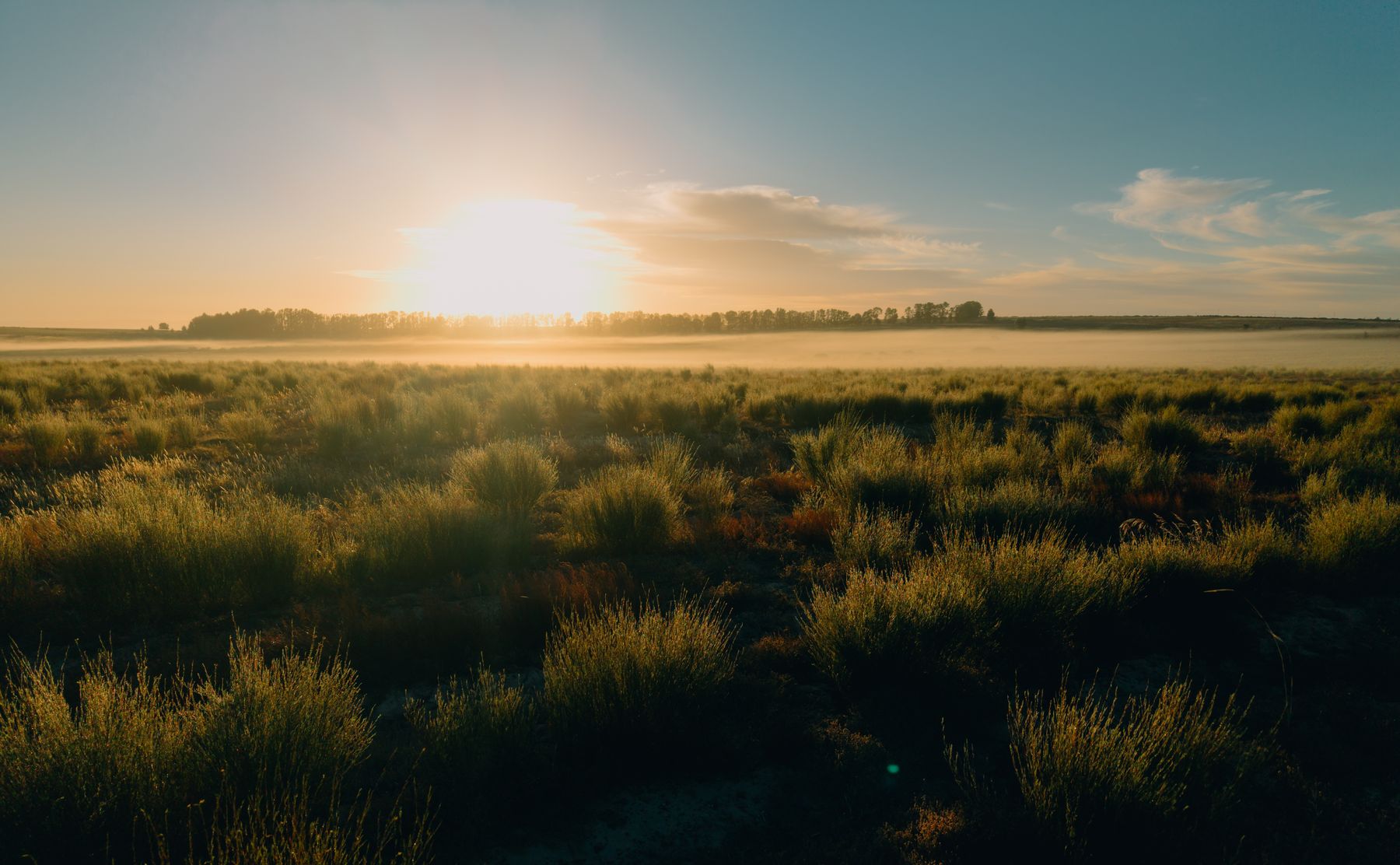
The older government brochure gives an indicative rainfall range in the low hundreds of millimetres a year and strongly acidic, deep, sandy, freely draining soils. Treat these as historical orientation, not a prescription. The plant's single basal stem branching above the soil and its deep roots suit a winter-rain climate with a long dry summer: the roots reach water the surface has lost, and the fine needle-like leaves lose little of it. That is also why establishment matters so much. A seedling planted into the winter rains has the season to root before the heat; one planted late may not.
Harvest and the sheaf
Harvest comes in summer, mostly by hand. Shoots of leaf and fine stem are cut and bound into sheaves for the trip to the processing court. Published cutting heights differ between sources, so the height is a decision for the grower and the agronomist, not a number this library states. What the harvest fixes is the lot: the season and year that should follow the leaf to the invoice. Fresh harvested mass and dry saleable mass are different quantities, and a careful grower records both.
The time between cutting, bruising and drying is a scheduling constraint on the court; a published harvest month says nothing about how long a sheaf may wait, which is something a grower agrees with the processor.
Hand cutting and mechanical harvest
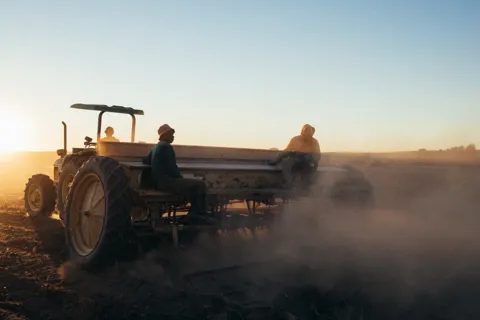
Processors describe the harvest as mostly by hand: a cutter with a sickle takes shoots of leaf and fine stem at a height chosen plant by plant, leaves the frame the plant will regrow from, and binds the cut into sheaves. A field harvester does the same job with a cutter bar set at one height along a row. What separates the two is not a quality hierarchy but a set of practical variables: cut height and branch selection, contact with the ground and sand picked up with the leaf, crop left on the plant or lost, damage to the regrowth frame and to plants on uneven ground, labour and the ergonomics of cutting in summer heat, terrain and row layout, transport from the row, and throughput in the window the court can accept.
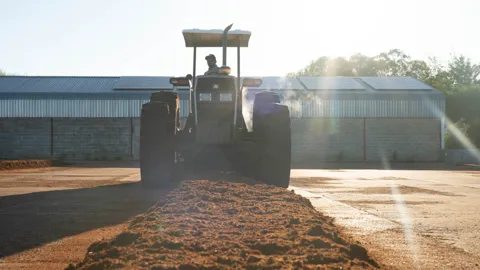
Two things this page does not say. It does not call hand-cut leaf premium, and it does not say that a machine damages plants as a rule, because no controlled rooibos-specific comparison of the two field methods, on the same final dry-yield and quality basis with full machinery and labour costs, was retrieved for this edition. And it does not confuse the field harvester with the cutter on the court: the machine that chops sheaves to a short length after harvest is a processing machine, and a photograph of it is not proof of mechanical field harvesting. A grower comparing methods should measure surviving plants, regrowth, dry saleable mass and cup quality per hectare over more than one season before deciding.
Regrowth and the rest
After each cut the shrub shoots again from its frame and grows through the year to the next harvest, so one planting gives several crops. Cutting too hard or too often shortens the life of the stand. After several harvests the old plants come out and the land rests, often under a cover crop such as lupins or oats, before rooibos goes back in. Later guidance states that fire is not used to clear old fields because it destroys soil organic matter; an older brochure said otherwise, and this library records the conflict rather than restating the old advice.
Why the cycle shapes the market
Because a planting yields nothing in its first year and reaches its best in its second and third, the leaf that reaches the court this summer was decided on two or three winters ago. Industry production varies with rainfall and planting cycles, and a dry winter or a failed planting season cuts crops years out. The market-cycle page draws what that lag does to stock and to the signal growers follow.
A field record worth keeping
Record block identity, area, soil sampling and laboratory, seed source and lot, sowing and transplant dates, spacing, establishment losses, rainfall, weed management, inputs and harvest history. Separate planted area from surviving productive area when you calculate yield. Decisions that need local evidence rather than a regional average: seed provenance and germination treatment, plant population and replacement cycle, soil and leaf analysis before any fertiliser decision, pest and weed identification with the registered remedy and the destination market's residue rules, and conservation permissions before any new land is cleared.
Sources and notes for this page
The calendar and the eighteen-month first harvest follow the Council's description; soils and rainfall follow the 2012 brochure as orientation only; cutting is described by two processors with different heights, so no height is given as a rule. The fire statement comes from the EU single document. The yield curve referred to in the lag section is the Almanac's reference model, an estimate. The hand-and-machine section rests on the processors' descriptions of hand harvesting and court cutting; no controlled rooibos-specific comparison of the two field methods was retrieved, and none is invented.
- SA Rooibos Council, Frequently asked questions, retrieved 2026-10-21.
- Department of Agriculture, Rooibos tea brochure, 2012, retrieved 2026-10-20.
- Rooibos Ltd, About rooibos, retrieved 2026-10-20.
- Carmién, Rooibos production and processing, retrieved 2026-10-21.
- EU Implementing Regulation 2021/865, Rooibos / Red Bush PDO, retrieved 2026-10-20.
- SA Rooibos Council, Export and production outlook, 2026, retrieved 2026-10-21.
- Rooibos Almanac, One crop, two ledgers (story dataset), October 2026, inspected read-only 2026-10-21.
How sources are chosen and read is explained on the Sources and methodology page.