
Library · Quality, brewing and uses
Grades and quality
Keep three layers apart: the export standard, the supplier's commercial description, and the specification you agree. The first is law, the second is a name, and only the third is a number you can hold anyone to.
Published 2026-10-21
Three layers
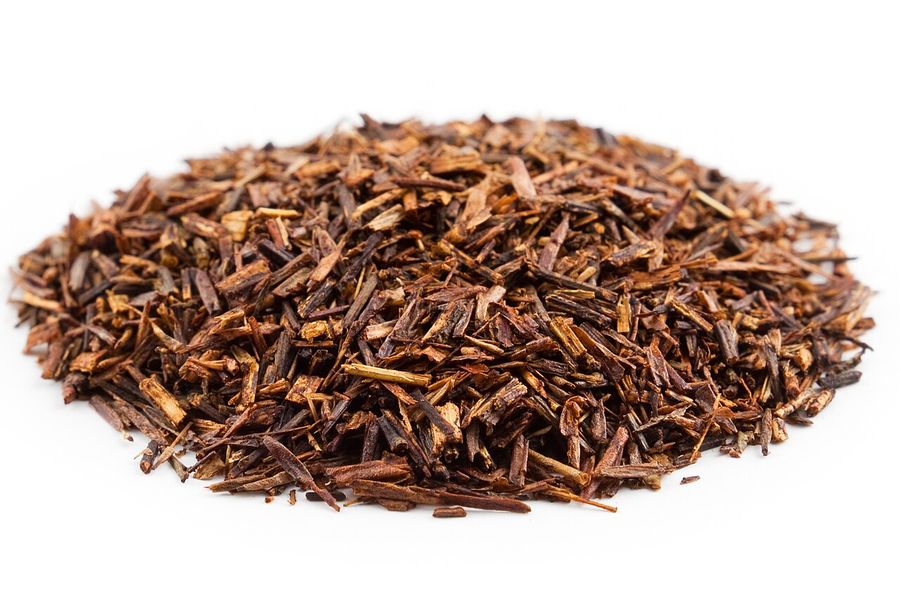
Rooibos is graded on colour, flavour, aroma and cut length. The names given to grades, though, are a processor's own. One supplier publishes a super fine cut of a millimetre or two for tea bags, a short cut a little longer for packed teas, a long cut of several millimetres for loose tea and pyramid bags, a "choice" grade with more stem, a dust fraction for espresso-style mixes, and milled powders; another supplier's names for similar material will differ, and one processor's "superfines" need not match another's. The official export standard sets quality, container, marking and traceability requirements and does not make different catalogues equivalent.
Two practical consequences. First, compare suppliers on the specification, not the name. Second, if you have a cup you like, find out which grade produced it and ask for that grade's specification, so you can recognise it again from another source.

What a specification should say
- Botanical and product identity, and whether the lot is red or green.
- Cut distribution as a sieve distribution, not just a grade name; leaf-to-stem composition where it matters to you.
- Colour, described or graded, so the lot can be checked against it.
- Moisture as a number with the method used. The protected-name document gives criteria of its own for oxidised and green product; a buyer's ceiling may be stricter.
- Bulk density and method, if you pack by volume.
- A sensory reference sample and the recipe used to assess it.
- Contaminant limits, packaging and intended market.
- Harvest season and year; any treatment after drying and when; storage and the shelf life stated, with its basis.
Keep "foreign matter" separate from the plant's own stems. A pale rooibos stem may affect composition or cup quality without being foreign material. If a supplier cannot provide these in writing, that is itself a finding, and a reason to compare with one who can.
Sieving: fractions before names
Secondary processing accepts a raw lot, samples and cups it, passes it over a magnet and through screens, removes foreign matter, blends to a specification, pasteurises and re-dries, tests, holds and releases. The screens do one physical thing: they split the lot by particle size into fractions. What each fraction is called, and which product it goes into, is a decision the processor makes afterwards. Physical fractionation and sensory classification are two different decisions, and suppliers arrange the steps differently; the secondary stage on the explorer lists the questions that follow from that.
Three definitions keep the fractions honest. Dust is the fine fraction that passes the smallest screen; it is a product in its own right for espresso-style mixes, and dust is not contamination. Rework is material returned to the line, which a lot record should name. Stem is part of the plant; a native rooibos stem is composition, not foreign matter, and the leaf-to-stem ratio belongs in the specification rather than in the foreign-matter count.
One supplier's cut bands, and why they overlap
Carmién publishes its red cuts as super fine cut 0.5 to 2 mm for tea bags, short cut 0.5 to 2.5 mm for blended packed teas, and long cut 3 to 6 mm for loose tea and pyramid bags, with a choice grade of irregular size and powders without a stated range; its green fine cut is 0.5 to 2.5 mm and its green long cut 3 to 6 mm. These are that supplier's catalogue ranges, quoted here because they show two things: the bands overlap, so a particle of 1.5 mm belongs to two names, and no band promises that every particle in a lot falls inside it. That is why the comparable number is a lot's own sieve distribution, and why a longer cut is a different product rather than a higher quality.
What good quality means, in separate dimensions
Good quality means fit for the intended product and the agreed specification, plus safety and authenticity. Those are separate dimensions, not one ladder, and a lot can score well on one and badly on another:
- Sensory. Aroma, flavour, colour, body and taints in a defined infusion, assessed with a vocabulary such as the ARC wheels, the 2017 revision for red and the 2024 aroma and palate tools for green; a red sample's greenness can signal incomplete processing, whereas green rooibos is a distinct intended product.
- Physical. Cut distribution, bulk density and packing performance in the buyer's own bags or line.
- Moisture and water activity. Measured, with the method and basis stated; green rooibos in particular takes up moisture in storage.
- Safety. Foreign matter and metal, microbial results and relevant contaminant screens on a certificate of analysis for the lot, with the method and laboratory named. A dry product still needs validated controls.
- Identity and release. Traceability, lot identity, consistent release decisions and barrier packaging and storage.
- Status. Organic status, Fairtrade status and the protected designation of origin are separate certificates and paperwork, proven by current documents from their issuers; they are not grades.
A commercial cut name sits in none of these columns; it is a supplier's label for a fraction. And a higher aspalathin content is not automatically a better drinking quality or evidence of any effect on the body; it is a measurement that belongs with the lot's analysis, if a buyer asks for it. Actual limits for a destination and a product come from that market's current rules and the buyer's specification, not from an old brochure.
Words for what you taste
The Agricultural Research Council developed a rooibos aroma wheel from two hundred and eight oxidised samples spanning two production areas and three production years. It supplies a shared descriptive vocabulary rather than a scale of worth: positive associations such as rooibos-woody, fynbos-floral and honey-like, and a set of named taints to recognise. A sensory lexicon manual exists and copies can be requested. The wheel's artwork belongs to the ARC and is linked from the sources page rather than reproduced.
Prompts, not descriptors you should expect to find: colour (pale, amber, deep red, brown; clear or cloudy), aroma (woody, sweet, hay-like, fruity, smoky), body (thin, medium, full; coating or washing through), finish (stops quickly or lingers; anything harsh at the end), and change on cooling.
A repeatable cupping
- Code the samples. Representative samples from the lots in question, coded so the taster does not know which is which, plus a documented reference sample.
- Fix the recipe. Leaf mass, water volume and composition, water temperature, infusion time and filtration, the same for every cup. Record them.
- Assess in order. Dry material first, then liquor colour and clarity, aroma, flavour, mouthfeel and aftertaste.
- Record before judging. Descriptors and defects first; an overall accept or reject decision last.
- Repeat blind. Duplicates and blind repeats reveal inconsistent assessment.
- File it with the lot. Recipe, panel, scores and photographs stay with the lot record.
This is a suggested structure. A trained-panel procedure comes from the ARC manual or a buyer's own protocol, and a processor's internal scorecard is a customer example, not a national grade.
Laboratory evidence
Sensory assessment tells you what a lot is like; laboratory testing tells you whether it meets a limit. Moisture, microbial results and any contaminant screen belong on a certificate of analysis for the lot you receive, with the method and the laboratory named. Ask for it with the specification, and ask whether the sample you tasted came from the same lot the certificate describes.
Sources and notes for this page
Cut names and size bands are quoted from one supplier's catalogue pages as an illustration that names are supplier-specific, not as a standard. The aroma vocabulary follows the ARC wheels (the 2017 revision and the 2024 green rooibos tools); the artwork is copyright ARC and is linked, not copied. The cupping method is a suggested structure, not an adopted protocol. Water activity in storage follows a 2024 paper read as an indexed excerpt; the microbial point follows the 2014 review.
- SA Rooibos Council, Frequently asked questions, retrieved 2026-10-21.
- Carmién, Bulk rooibos cuts, retrieved 2026-10-20.
- Carmién, Rooibos grades and cuts, retrieved 2026-10-21.
- Department of Agriculture, Rooibos export standard B8, retrieved 2026-10-20.
- ARC, Rooibos aroma wheel, 2017, retrieved 2026-10-20.
- ARC, Sensory wheels for the herbal tea industry, retrieved 2026-10-21.
- ARC, Sensory manuals, retrieved 2026-10-20.
- Green rooibos sensory tools and storage, 2024, abstract or excerpt read through a search index 2026-10-21; the document itself was not retrieved.
- Gouws, Hartel and van Wyk, 2014, retrieved 2026-10-20.
- EU Implementing Regulation 2021/865, Rooibos / Red Bush PDO, retrieved 2026-10-20.
How sources are chosen and read is explained on the Sources and methodology page.