Library · People, land and evidence
Heritage and sustainability
The story includes traditional knowledge holders, small producers, farm workers, researchers and commercial processors. Commercialisation is not the beginning of people's knowledge of the plant.
Published 2026-10-21
Knowledge before commerce
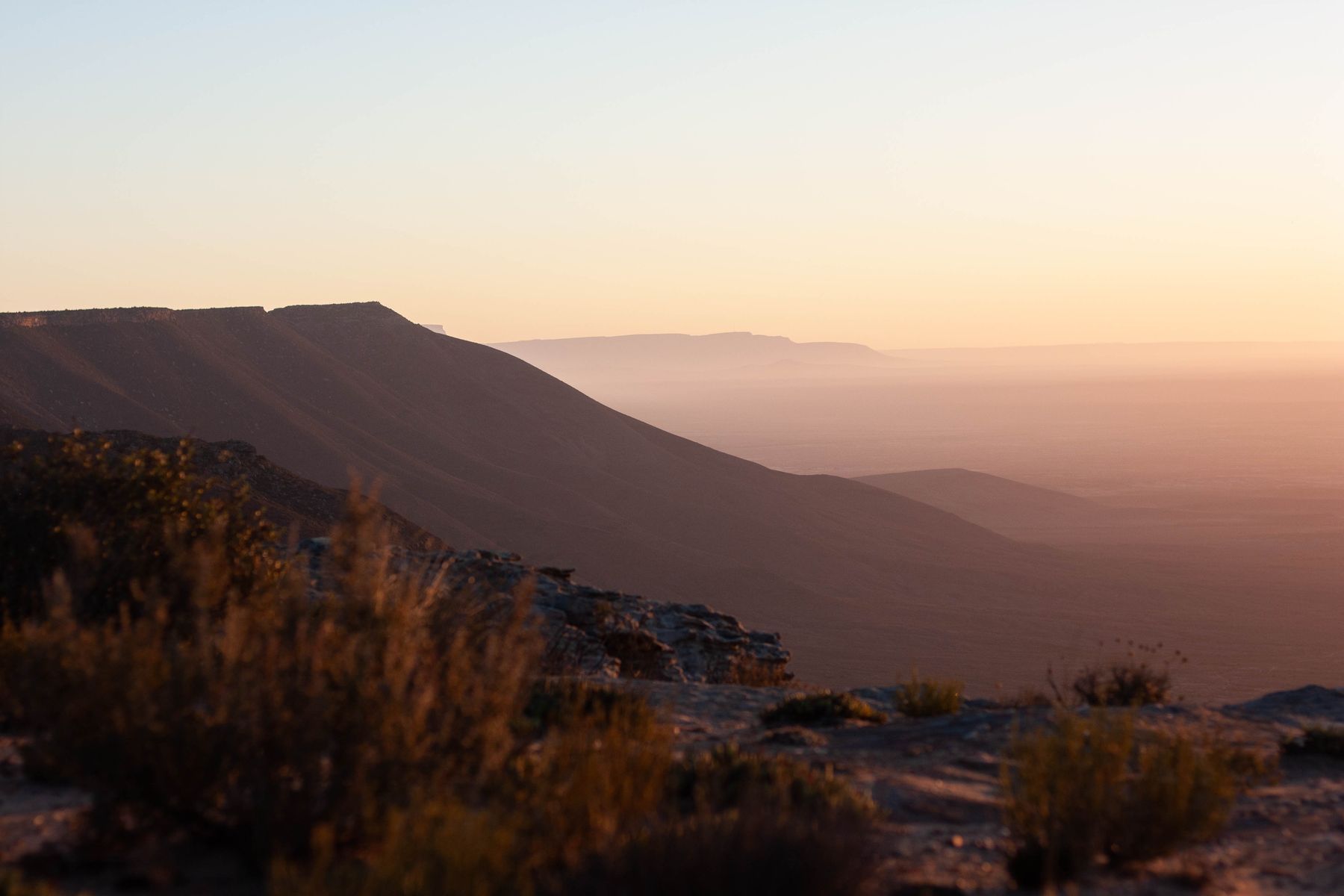
The Cederberg is the plant's natural home, and the Council records that local communities used it to brew tea for centuries before the industry existed. The region's rock art, between a few hundred and several thousand years old, is part of the legacy of the Khoi and San people who lived there. The 2019 benefit-sharing agreement, below, formally recognises Khoi and San traditional knowledge associated with rooibos. This library does not invent precise ancient dates or an undocumented indigenous name for the plant.
A sourced timeline
- Before commercialisation
- Traditional use, as recognised by the 2019 benefit-sharing process.
- 1904 and the 1930s
- A processor's historical account associates Benjamin Ginsberg with early marketing and Dr Le Fras Nortier with the development of cultivation. Self-reported company history.
- 1954 and 1993
- The same account describes a control board established in 1954 and privatised in 1993.
- Early 2000s
- SANBI and UNDP profiles describe the Heiveld cooperative's smallholder organisation in the Suid Bokkeveld and sustainable wild-harvest research.
- 1 November 2019
- The industry-wide traditional-knowledge benefit-sharing agreement is launched.
- May 2021
- The European Union registers Rooibos / Red Bush as a protected designation of origin.
- July 2022
- Government reports a first transfer of levy proceeds to two community trusts.
- 2025 and 2026
- A domestic geographical-indication application and questions about benefit administration are live matters that need their own current records.
The benefit-sharing agreement
The agreement launched in November 2019 recognises Khoi and San traditional knowledge associated with rooibos. The launch statement describes an annual levy of one and a half per cent on processors' farm-gate purchases excluding VAT: a purchase-value basis, not a share of retail sales or of profit. In 2022 government recorded a first transfer to the Khoi-Khoi Peoples Biodiversity and Rooibos Trust and the Andries Steenkamp ABS Trust. A transfer into a trust is not proof that each household received a payment, and the peer-reviewed account of the agreement discusses possible non-monetary benefits such as training without establishing that every proposed scheme was carried out. Anyone who needs to comply should obtain the executed current agreement and its implementation instructions rather than rely on a launch statement.
Cooperatives and small producers
Heiveld, Wupperthal, the commercial companies and the representative community councils are distinct organisations. The SANBI case study describes conservation strips, research into sustainable wild harvesting and farmer organisation in the Suid Bokkeveld; the UNDP profile describes market access and community investment. Membership totals and certification start dates differ across historical profiles, so this library preserves each source's date rather than choosing one number as current. Certification floors and premiums exist for rooibos under schemes such as Fairtrade International; they are schedules, not market prices, and no figure is restated here.
Fynbos, water and soil
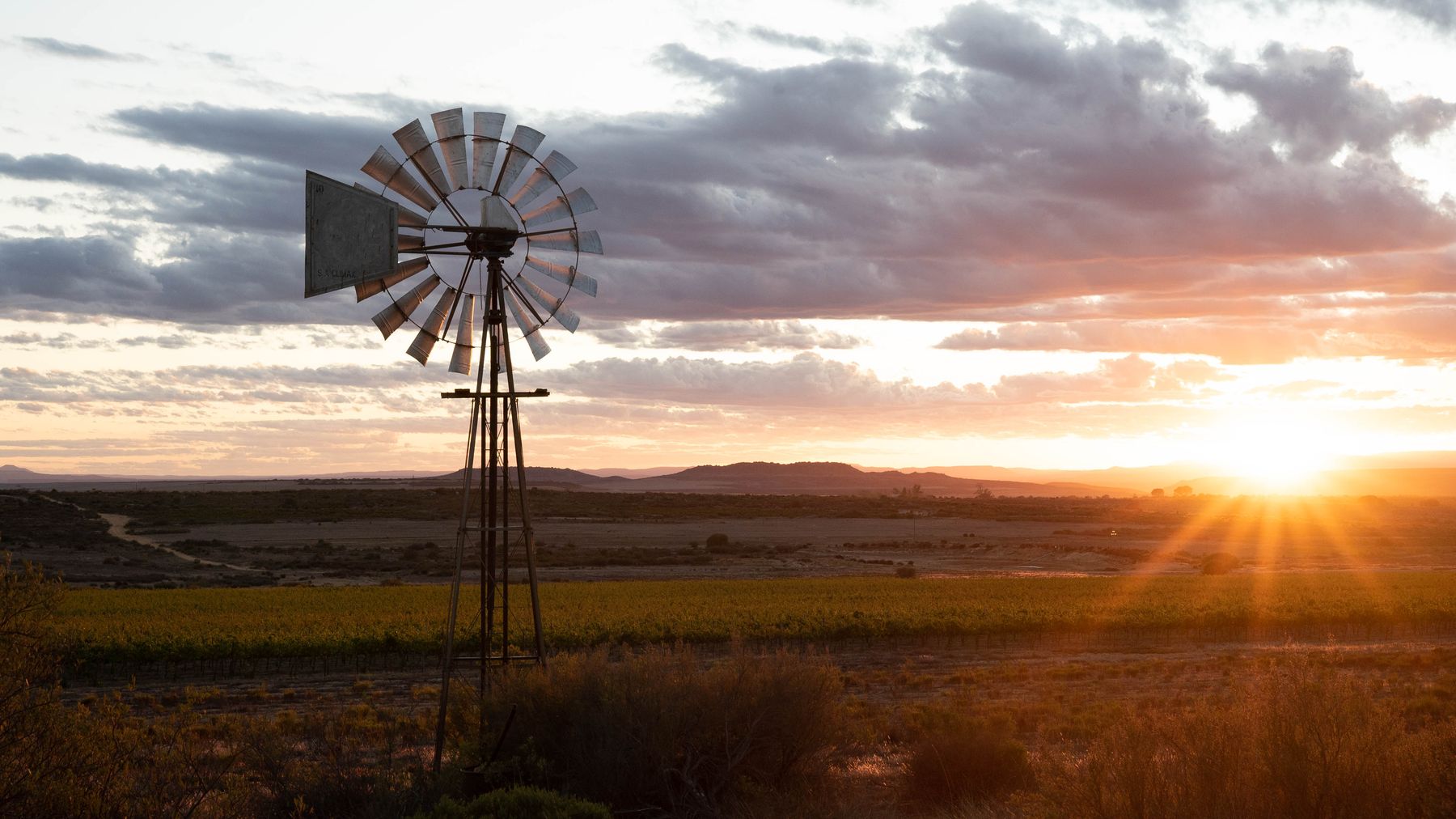
Rooibos production sits inside fynbos conservation, water scarcity, soil protection and traditional livelihoods. The Cederberg holds a wilderness area with World Heritage status, mountain fynbos and Succulent Karoo plants numbering well over a thousand species, and the catchment of the Olifants River. Industry production varies with rainfall and planting cycles; the Council's 2026 outlook gives a 2025 production estimate of about fifteen thousand tonnes as dated context, not a measured yield for any farm. Wild and cultivated stocks need traceable identity, and a claim of sustainable harvesting should be backed by a management plan, species identification, harvest and recovery observations, permissions and any certification claimed.
Do not adopt old clearance advice automatically
A 2012 government brochure describes burning after clearing an old stand. The later EU single document for the protected name states that fire cannot be used to clear cultivation areas because it destroys the soil's organic content. This library records the conflict and does not restate the old instruction; current conservation, fire and agronomic advice belongs to the people who give it.
What a farm can show
Existing natural vegetation and conservation areas, planting history, erosion observations, rainfall, cover and rotation practice, input use, wild-harvest identity and permissions, harvest intensity and recovery. Verify site-specific land-use and biodiversity permissions before any expansion. A buyer who wants a sustainability story should ask for these records rather than a sentence on a label.
Sources and notes for this page
Dates in the timeline are each kept with the source that states them; cooperative membership figures differ between profiles and none is given as current. Transfers to trusts are not presented as payments to individuals. The fire conflict between the 2012 brochure and the 2021 EU document is recorded, not resolved.
- SA Rooibos Council, Frequently asked questions, retrieved 2026-10-21.
- Rooibos Ltd, About us, retrieved 2026-10-21.
- SANBI, Heiveld case study, 2009, retrieved 2026-10-20.
- UNDP Equator Initiative, Heiveld cooperative, retrieved 2026-10-20.
- South African Government, Rooibos benefit-sharing launch, 2019, retrieved 2026-10-20.
- DFFE, First benefit transfer, 2022, retrieved 2026-10-20.
- Natural Justice, The rooibos access and benefit-sharing agreement, retrieved 2026-10-20.
- Schroeder and colleagues, 2020, retrieved 2026-10-20.
- EU Implementing Regulation 2021/865, Rooibos / Red Bush PDO, retrieved 2026-10-20.
- Department of Agriculture, Rooibos tea brochure, 2012, retrieved 2026-10-20.
- SA Rooibos Council, Export and production outlook, 2026, retrieved 2026-10-21.
- Fairtrade International, Minimum price and premium table, retrieved 2026-10-20.
How sources are chosen and read is explained on the Sources and methodology page.